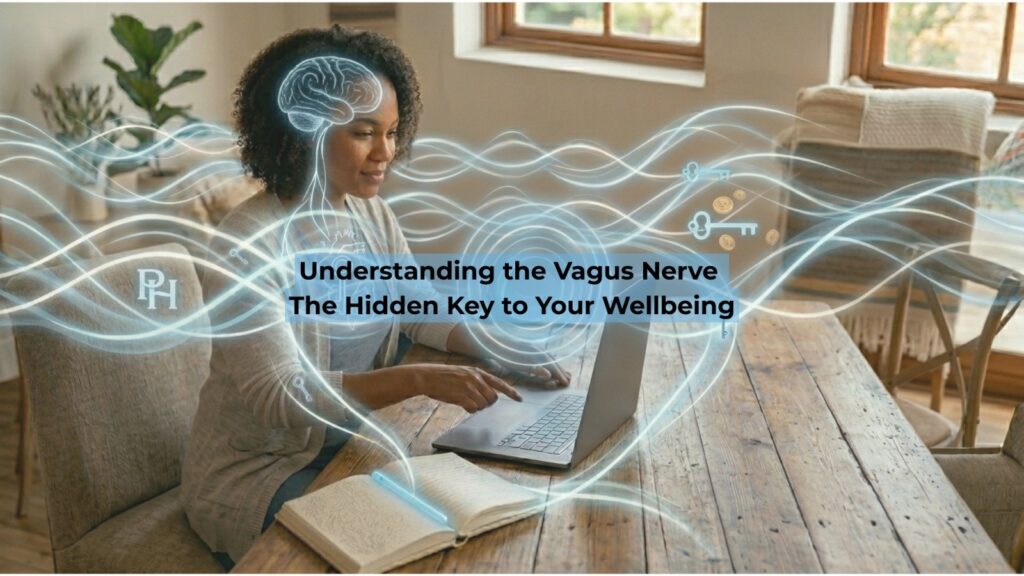
Understanding the vagus nerve
The Hidden Key To Your Well-being
Have you ever felt like your body is constantly “on edge” … even when nothing is wrong? You try to relax. You try to rest. But your body won’t switch off.
This is where the vagus nerve comes in. It is one of the most important – yet least understood – systems in your body.
And it may be the missing link between: * Stress and physical symptoms * Emotional trauma and your health * Anxiety and your ability to feel calm
Understanding the vagus nerve is often the first step toward true, holistic healing


The vagus nerve is the longest cranial nerve in your body.
It runs from your brainstem down through your:
It acts as a communication highway between your brain and body.
According to Psychology Today, the vagus nerve plays a central role in the autonomic nervous system and influences how your body responds to stress and safety signals.
Think of it as your body’s internal “calm switch”.
Why the Vagus Nerve matters for your Well-being
Your nervous system has two main modes:
Fight-or-Flight (Sympathetic)
Activated during stress, it increases your heart rate and keeps you alert
Rest-and-Digest (Parasympathetic)
Activated during safety, it promotes healing and allows the body to relax
The vagus nerve is responsible for helping you shift between these states.

When it functions well: When it is dysregulated:
You feel calm You feel stuck in stress
You recover from Stress quickly Your body struggles to relax
Your body returns to balance Symptoms begin to appear
The link between Trauma and the Body
One of the most important things to understand is this: Trauma is not just emotional. It is physiological.
When you experience stress or trauma, your nervous system responds automatically.
The vagus nerve plays a key role in this process.
Research shows that the vagus nerve reacts to perceived threats—even when you are not consciously aware of them—and can keep the body in a prolonged stress response.
Over time, this can lead to:
* Chronic tension
* Anxiety
* Fatigue
* Digestive issues
As explained in nervous system research, prolonged stress can keep the body stuck in fight, flight, or freeze, making it difficult to return to a calm baseline.
This is why you may feel: “I know I’m safe… but my body doesn’t feel safe.”


WHAT IS “VAGAL TONE” (AND WHY IT MATTERS)
You may hear the term “vagal tone.”
This refers to how well your vagus nerve functions.
High vagal tone:
You recover quickly from stress
You feel more resilient
Low vagal tone:
You stay stuck in stress
You feel overwhelmed more easily.
Improving vagal tone is one of the most effective ways to:
Reduce anxiety
Improve sleep
Support emotional healing

HOW TO SUPPORT YOUR VAGUS NERVE NATURALLY
The good news is:
You can gently support your vagus nerve through daily practices.
- Breathwork – Slow breathing signals safety to the nervous system.
- Movement – Gentle movement helps release stored stress.
- Connection – Feeling safe with others supports nervous system regulation.
- Magnesium Support – Magnesium helps calm the nervous system and reduce physical tension.
👉 Read more here:
Magnesium for Stress Relief: South Africa’s Natural Solution for Anxiety and Sleep

Why Holistic Healing is Essential
Healing is not just about the mind.
It requires:
- Nervous system regulation
- Physical support
- Emotional awareness
The vagus nerve sits at the center of this connection.
According to polyvagal theory, your nervous system constantly scans for safety or danger, shaping how you feel, think, and respond.
This means:
- You cannot think your way into calm
Your body must feel safe first.

RECLAIMING YOUR WELLBEING
When your vagus nerve is supported, everything begins to shift:
- You feel calmer
- You sleep better
- You respond instead of react
- Your body begins to heal
This is the foundation of true wellbeing.
Not just managing symptoms—
but restoring balance from within.
Key Takeaways: The Vagus Nerve and Your Wellbeing
- Vital connection: The vagus nerve links your brain to vital organs, influencing stress, digestion, and relaxation.
- Balance matters: When the vagus nerve is underactive, symptoms like anxiety, poor digestion, or fatigue may appear.
- Simple stimulation: Practices such as deep breathing, humming, meditation, and cold exposure can help activate the vagus nerve.
- Holistic wellbeing: Supporting vagal tone improves resilience, emotional balance, and overall health.
- Practical steps: Incorporating small daily habits—like mindful breathing or gentle yoga—can strengthen your vagus nerve over time.

Ready to go Deeper?
If you are ready to move past just understanding the science and want to start actively reprogramming your nervous system’s response, explore: